REVIEW: Imbeciles by Adam Cohen (RHC 2016: Book about Politics)

51cr+Zg3K4L._SX327_BO1,204,203,200_

star-602148_1280star-602148_1280star-602148_1280 3/5 stars

Cohen gives a voice to silent victims in one of America’s most embarrassing historical blunders.

In all of my schooling, I heard the term “eugenics” mentioned maybe twice – in passing. I haven’t seen much on the topic in books, history courses, or anywhere else. Why has this part of American history been forgotten? Author Adam Cohen is here to make sure we don’t forget with his very thorough examination of eugenics and sterilization in the United States. Between 1907 and 1983, the movement rendered tens of thousands of people forever unable to have children due to their supposed lack of intelligence.

Imbeciles looks at decades of lawmakers, doctors, scientists, judges, and others who abused their power to oppress classes of people they deemed unfit for reproduction. They were attacked based on “inherited” intelligence and labeled imbeciles, idiots, morons, and feebleminded; but underlying those often false labels were prejudices against immigrants and the poor. If you think this book isn’t still relevant today, look no further than the big election year issues of racism and immigration, recent advances in genetic science, and a headline I saw on Facebook while reading this book: “Alabama Lawmaker Proposes Mandatory Castration for Child Sex Offenders.”

White supremacists acted out of fear, and victims such as title character Carrie Buck didn’t stand a chance. Under the care of mental institutions, many were told they were being operated on for abdominal issues and later couldn’t figure out why they weren’t able to have children. Cohen’s book made me angry on behalf of these people who were lied to by corrupted government officials who were supposed to take care of them. I learned, sadly, that eugenics-based immigration restrictions prevented the Frank family (Anne Frank and her family, that is) from seeking safety in America when their lives were in danger. In addition, American eugenics policy greatly influenced, and was admired by, Hitler and the Nazis.

I couldn’t believe that some of these events actually took place in this country within the last century. But Cohen lays it all out in a book that is a must-read for American history and law buffs. It’s very detailed and really dives into the biographical information of the key players, showing you why they made the decisions they did without making excuses for their abhorrent behavior. We all hope for a nation made up of strong, intelligent individuals – but at what cost?

Release Date: March 1, 2016 (Penguin Press)
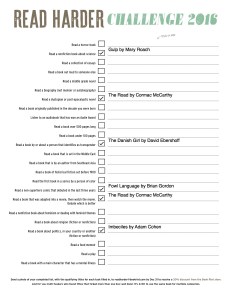
2016-03-13 RHC

Other books I considered for the book about politics task: All the President’s Men by Carl Bernstein and Bob Woodward, The Prize by Dale Russakoff

*You can find the editable form for the Read Harder Challenge (like the one I used above) at this link. I’ve also found good suggestions for each task on the Goodreads group for the challenge.
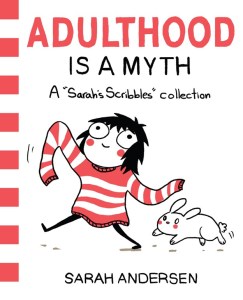
REVIEW: Adulthood Is a Myth by Sarah Andersen

9781449474195_frontcover

star-602148_1280star-602148_1280star-602148_1280star-602148_1280star-602148_1280 5/5 stars

A popular webcomic captures early female adulthood brilliantly, making for an excellent, quick read and gifting opportunity.

Judging by the website that provides the source material for Andersen’s book, the Sarah’s Scribbles webcomic appears to have started four years ago. I finished reading the book in about an hour and it doesn’t take long to see why her illustrations have been so popular. She covers plenty of topics facing modern millennials. Andersen describes the comics as semi-autobiographical and, as a result, they feature her character alongside her friends and pets.

I spent the hour laughing in bed while reading. It is a quick, refreshing, and instant feel-good read that showed me I’m not alone in being terrible at adulting. She somehow tackles life’s annoyances while making me giggle repeatedly. Andersen is just a bit younger than I am, and I related to her insecurities, womanly irritations (periods, clothes, body hair, etc.), introversion, and anxiety surrounding adult pressures. She just GETS it and I immediately wanted to gift this book to EVERYONE. I lack the commitment required to read online comics on a regular basis, but I would read every collection in book form that Sarah Andersen publishes.

Release Date: March 8, 2016 (Andrews McMeel Publishing)

A Reading List for Friending IRL

Friendship has been on my mind lately. Since becoming a mother and making the decision to stay at home with my child, I’ve discovered a new sort of lonely I hadn’t known before. Before that, my days were so full of different activities outside the home that I didn’t feel a need for friends. Besides, making friends had never really come naturally to me, I am a historically bad friend whenever I’ve had any, and I was raised on the idea that family is all you need. It’s true, family is always going to be there for you, but it’s not the same. For better or for worse, they have to like you and be nice to you (at least that’s how it works in my family). I realized that I was missing a huge piece in my life puzzle that would only enrich my human experience. And I really want my daughter to grow up with examples of healthy female friendship.

All of this may sound crazy to some of you, but many introverts can probably relate. Introverts, like myself, prefer a couple of very close friends to have deep conversations and experiences with. But it’s very hard to find and engage with those people at first. Furthermore, friendship is an even bigger problem in the cultural sense. Technology and social media give us the illusion that we have tons of friends. In reality, most of us know a lot of people, but we still feel empty because we make no real effort to connect with them on a regular basis in deep or meaningful ways.

Recently, I read a couple of new books on the topic of female friendship. Perhaps the greatest lesson I learned from these books is that making and keeping friends is difficult, must become a priority in your life to see any results, and requires initiative. Friends aren’t just going to appear in your life, but it’s totally worth the effort to find women you can share life with. I don’t waste time on self-help books if I really don’t intend to change or take action, but this is an area I really wanted to work on. As a result, I’m glad I read these two books and would suggest them to anyone who wants to make friends but isn’t sure where to start.

cover82389-mediumFrientimacy by Shasta Nelson

Nelson’s book encourages you to make a list of friends/possible friends and then get to work. While filled with real suggestions for practicing the concepts within, the book focuses a lot on self love and overcoming obstacles to friendship, such as envy and jealousy. I’ll admit, it took me a lot longer than usual to get through this book, but the bulleted summaries at the end of each chapter were helpful. Nelson also includes lots of (free) companion materials and resources for the book on her website. I was inspired to immediately put some of the author’s tips into practice and I have already seen results! It’s amazing what happens when you are friendly and take initiative, right?

cover77776-medium

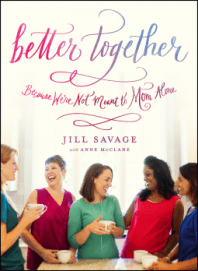
Better Together by Jill Savage

This book is specifically for mothers and is much more biblically driven. Many principles in the book overlap with Frientimacy, but I found it a lot easier to read because it is less philosophical/psychological and more action-oriented with real-life stories for examples; in other words, if Frientimacy is more “why,” Better Together is more “how.” The cover of this book is kind of ew, but Savage is truly gifted in uplifting readers and showing the power of God’s love in building friendships. I thought each of these books complemented the other well, and I’m glad I read both. They left me feeling totally motivated!

Better Together quotes Dale Carnegie in saying, “You can make more friends in two months by becoming interested in other people than you can in two years by trying to get other people interested in you.” How accurate this is! However, I do think it’s important to know yourself well if you want to be a better friend. In addition to the two new releases above, here are some backlist books that I like for discovering more about who you are:

51hA4n4bgwL._SX321_BO1,204,203,200_

The 5 Love Languages by Gary Chapman

How do you best give and receive love? This book can help you find out. Although it’s more directed toward married couples, we are definitely called to love our friends too. Read to find out whether your primary Love Language is Words of Affirmation, Quality Time, Receiving Gifts, Acts of Service, or Physical Touch.


41VU8jWz36L._SX360_BO1,204,203,200_

StrengthsFinder 2.0 by Tom Rath

I will forever sing the praises of StrengthsFinder. It beats all other personality assessments, in my opinion. It is incredibly accurate and specific, and it focuses on what your strongest skills are and how to use them. I’ve seen it used most in workplace settings but, again, knowing your personality and strengths is always going to come in handy in relationships and friendships.

REVIEW: I’m Glad About You by Theresa Rebeck

51LA6s0kNVL._SX329_BO1,204,203,200_

star-602148_1280 1/5 stars

Half of this book takes place in the good ol’ Buckeye State I call home, but that fact alone couldn’t save it.

I am striking out in fiction this year. This may be the year of nonfiction for me, which isn’t good or bad, or even surprising, because I like both fiction and nonfiction equally. I guess there is a lot of year left, so we’ll see how it goes. But I do know that I didn’t like my latest fiction read, I’m Glad About You by Theresa Rebeck. This, however, is why I often review new books that people haven’t read yet (and which are sometimes terrible) – so you don’t have to!

I always choose books with synopses that interest me, but there is always the chance that they will be duds. Rebeck’s book was on my Most Anticipated list, and my blurb on it was prophetic: “I’m hoping I don’t get too frustrated with (the main characters’) bad decisions before I find out how their story ends.” This story didn’t leave me frustrated as much as it left me with little emotion at all. There was no laughter or tears or hope for page after page of what I’d call “Midwestern Catholics Behaving Badly.” The author was born and raised in Ohio and, even though I’m a midwestern girl myself, her jokes and comments about its inhabitants were a little overplayed, especially in the midst of such distracting decision making by her characters.

There were no characters to root for here. In fact, they were all really despicable, sex-crazed alcoholics who made one unhealthy choice after another. What could have been a romantic story about growing up and growing apart was instead an unsatisfying look at characters who just can’t let go of their vices. Kyle rushes into marriage and having children with a wife he doesn’t love while working at a job he also doesn’t love. Alison throws herself into acting in New York, a dream that she reaches by having sex with anyone who may help her image and career. They seem to learn nothing from their mistakes and don’t really evolve, either for better or for worse.

I wanted to like the book for its potential to showcase midwestern values in ugly and unfortunate scenarios. Unfortunately, these values never really come into play, and readers are left with a book where, on the last page, you’re thinking, “Wait, that’s it? I just read nearly 400 pages of debauchery for that conclusion?” In addition to writing books, Rebeck is a successful New York play/TV/film producer and writer. I can kind of see that in her writing, but her skills don’t seem to translate well to novels. Save your time and money by skipping this one. Again, this is me reading bad books so you don’t have to. You’re welcome?

Release Date: February 23, 2016 (G.P. Putnam’s Sons)

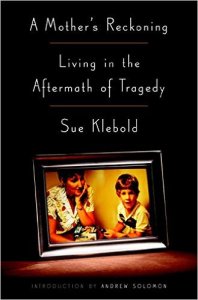
REVIEW: A Mother’s Reckoning by Sue Klebold

41nzWiTwj2L._SX327_BO1,204,203,200_

star-602148_1280star-602148_1280star-602148_1280star-602148_1280 4/5 stars

“But over time, I’ve come to feel that, for myself, I am glad I had kids and glad I had the kids I did, because the love for them – even at the price of this pain – has been the single greatest joy of my life. When I say that, I am speaking of my own pain, and not the pain of other people. But I accept my own pain; life is full of suffering, and this is mine. I know it would have been better for the world if Dylan had never been born. But I believe it would not have been better for me.” – Sue Klebold

As soon as I heard about A Mother’s Reckoning: Living in the Aftermath of Tragedy by Sue Klebold, I knew I wanted to read it. I was young when the Columbine tragedy happened, but I was old enough to be deeply affected by it. I remember watching coverage of the event for a long time after, and I remember watching changes in my own life because of it. My schools practiced lockdown situations, youth in dark clothing were treated differently, and gun laws were challenged harder than ever. As dark and disturbing as school shootings inherently are, they are also fascinating from a psychological perspective. For this reason, I reserved Klebold’s book at my library and picked it up to begin reading on its release date.

The only other book I ever read on Columbine was She Said Yes: The Unlikely Martyrdom of Cassie Bernall by Misty Bernall. Cassie was a victim in the shooting, and her mother wrote the book about her daughter’s life. While Klebold’s book is also from the perspective of a mother who experienced great loss, hers is additionally an examination of a son who became a killer. Klebold’s heavy book sheds new light on the tragedy from a parent who was unaware of the war her son was fighting in his own mind. Much of what she writes is focused on mental health issues (100% of the book’s profits will go to mental health organizations) or “brain health,” as she prefers to describe it in order to make it a more tangible condition. Sixteen years after the shooting, Klebold has developed a clearer understanding of her son’s desire to die and how he used homicide as a means of suicide. With this awareness, she describes how she now uses her own painful experience to help others who are in pain – those who have survived their own suicides or suicides of loved ones.

While the book is just one glimpse into a tragedy that involved many, it seems to be a very honest and intimate look at the events leading up to, and following, two boys taking fifteen lives. Klebold includes many of her personal journal entries as windows into what she once considered a picture-perfect family life. Her son Dylan is portrayed as a quiet yet happy child who turned into a depressed teenager who primarily wanted to die; Eric Harris, the other boy involved, is portrayed as a psychopath who primarily wanted to kill and took Dylan along for the ride as a willing participant. Klebold paints two very different portraits of Dylan and Eric, and I wonder how this will be perceived. It makes me wish the Harris family would share their story, but they may never do so and that is a personal decision they have every right to make.

I also wonder how the victims’ families will react to the book (if they even read it). Klebold’s account sometimes reads as a defense strategy to take some of the blame off of her and her husband, Tom – understandably so in light of the criticism they have received. I admit, it’s easy to turn attention straight to the parents when something goes terribly wrong with a child. But, as a mother now myself, I feel for Sue Klebold. I do believe, as the book suggests, that you can do your very best and still lose a child to estrangement, criminal activity, or even death. This book is certainly a call to closely examine your family and dig deeply enough to prevent such things from happening. But not all crises can be averted despite our best efforts. The takeaway here is that a mother is still a mother no matter how she loses her child and grace and forgiveness can make a difference in the aftermath of what may be a mother’s worst possible scenario.

Regardless, Klebold is very clear about not making excuses for her son despite his mental illness. And she takes on a lot of her own guilt, as noted in this passage: “What I do know is that Dylan did show outward signals of depression, signs that Tom and I observed but were not able to decode. If we had know enough to understand what those signs meant, I believe that we would have been able to prevent Columbine.” Wow.

Release Date: February 15, 2016 (Crown)

RHC 2016: Book by or about a Person who Identifies as Transgender

RHC 2016-02-1225242079

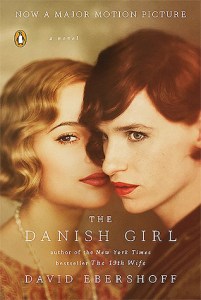
The Danish Girl by David Ebershoff is the first book for the Read Harder Challenge that really stretched me and pulled me into an unfamiliar realm. Ebershoff’s novel tells the story, based on a real marriage, of a man who transitions to being a woman with the help of his wife. Even though I know transgender people, I don’t know much about the experience of being transgender. The novel’s time period was different for me as well. I usually stick to more contemporary settings and writing styles. After the first few chapters, I wasn’t sure whether I’d be able to get into the story, but it didn’t take long to pick up.

Ebershoff’s detailed writing brings foreign lands and the 1920s-1930s era to life. His descriptions also make real the pain of finding yourself in a relationship where you realize you, or your significant other, are not the person you thought they were. You quickly figure out how the story will probably end, but it explores the limits of love and devotion in a way that pulls you in and keeps you there. Anyone can relate to questioning identity and taking steps toward becoming your true self, within a relationship or as an individual. Being inspired by a true story, the book definitely made me want to know more about what really happened. I put the movie (releasing March 1) on hold at my library, because I’m interested in seeing how the on-screen visuals match up to Ebershoff’s beautiful imagery.

Other books I considered for this task: Trans: A Memoir by Juliet Jacques

*You can find the editable form for the Read Harder Challenge (like the one I used above) at this link. I’ve also found good suggestions for each task on the Goodreads group for the challenge.
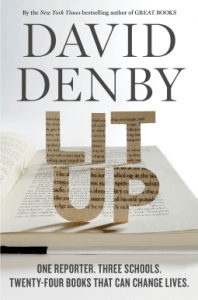
REVIEW: Lit Up by David Denby

cover78683-medium

star-602148_1280star-602148_1280star-602148_1280 3/5 stars

Denby’s book is worth a read for high school English teachers determined to help young students develop a love of literature.

As the book’s subtitle indicates, Lit Up is about David Denby’s experience in several high school English classrooms over the course of a couple of years. He details a few teachers’ techniques for transforming students’ attitudes about reading. Be prepared: these teachers and students engage in some deeper thinking and discussion than I remember experiencing at that level, even in advanced placement courses. I needed to give my brain a rest every now and then while I was just reading about it!

Denby analyzes the methods and dialogue of the teachers and students – and not always objectively. At some points in the book, I wished the author had held back from inserting his own life philosophies and political views. It didn’t ruin his overall purpose, however, which was to argue in favor of pushing students toward great literature and maintaining the importance of the humanities in a STEM-focused generation. My only other warning about the book is that Denby completely outlines the plots of many of the books the classes read. These very descriptive sections are great for readers, except when you want to avoid spoilers about books you haven’t yet read! In that case, I recommend skipping those parts; you won’t lose out on the main information.

The teachers in Lit Up are clearly very passionate about what they do and I admired their resolve in teaching difficult texts to sometimes difficult students. It was inspiring to read about the students going from either not caring or not knowing how to approach important literature to actively engaging in the classroom. It made me determined to be in a role like that someday, but it also was a bit intimidating. I could only hope to be such a great educator. But this book offered some excellent ideas for doing so and I would recommend it to anyone interested in examples of what does or doesn’t work in an English classroom today.

Release Date: February 2, 2016 (Henry Holt and Co.)

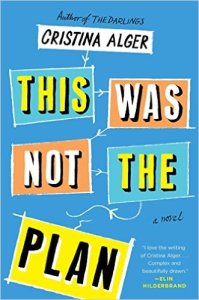
REVIEW: This Was Not the Plan by Cristina Alger

51qIypz3xaL._SX329_BO1,204,203,200_

star-602148_1280star-602148_1280 2/5 stars

A lot happens in this novel, but it feels like the author barely scratches the surface to reach any depth.

Within a couple of years, Charlie lost his wife and his job, and he also lost his happiness somewhere along the way. A series of bad decisions leads him to allow new people into his life and reconnect with others, including his estranged father. Charlie must learn to relax and determine what’s important to him before he loses everything he has left. It sounds like a good story that will tug at the heartstrings, right? The story is good, but the delivery isn’t great.

Charlie struggles with working his life away as a lawyer in the financial industry, but his situations move quickly from being relatable issues to rich-people problems. There isn’t enough humor, drama, or heart in the novel to set it apart as anything else. Every plot point touches on tender, real-life stuff, but these scenarios and the characters involved seem underdeveloped in a way that feels like the author is just trying to check off boxes.

The book picked up and slowed down with reliabilty. Not one character is particularly interesting or lovable – except for sweet, 5-year-old Caleb. Charlie’s son is quite an individual and I would have loved to know more about him. The scenes between Caleb and his father are some of the best moments in the book. Second to those are the very few chapters that flash back to interactions between Charlie and his late wife. Descriptions of him proposing to her and, later, of her announcing her pregnancy were excellent. But those moments were few and far between for me. I appreciated the overall message that life is short and time with our loved ones is shorter, and the book ended well. I just wish the journey to the end had been more enjoyable.

Release Date: February 2, 2016 (Touchstone)

Experimentation with True Crime

Thanks to a couple of e-galleys, I had the opportunity to dip my toes into the waters of true crime. I hate to say it, but I probably wouldn’t recommend either of them, except in very specific circumstances. I would not pick either of the following titles for pleasure reading. However, if you’re a student of sociology or racial studies, read on below.

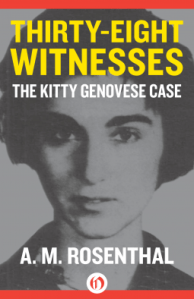
Thirty-Eight Witnesses by A.M. Rosenthal

cover77373-medium

Rosenthal covers the 1964 murder of Kitty Genovese. An assailant attacked Genovese repeatedly for nearly an hour in the presence of thirty-eight witnesses, none of which reported the crime in progress. The book itself is very short and repetitive. It focused more on the witnesses than the crime, raising the question of what causes a person to turn a blind eye to someone in desperate need of assistance. I first heard of this story in my sociology courses as an undergraduate, and this is precisely the audience I would recommend the book to: those who are interested in social behavior. Genovese’s story makes for interesting conversation, not only about others’ propensity to ignore a horrific situation rather than help, but also about the need to look inward and decide how you would react in such a position.

Release date: December 15, 2015 (Open Road Integrated Media)

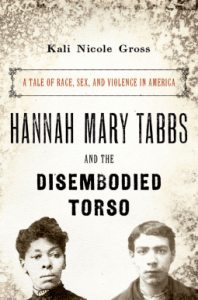
Hannah Mary Tabbs and the Disembodied Torso by Kali Nicole Gross

cover77875-medium

This book about the mysterious circumstances surrounding an 1887 murder is certainly a history lesson for anyone interested in post-Reconstruction era race issues. Gross details how the Philadelphia area’s white law enforcement and the case’s jury (also white) dealt with a complicated murder case involving black suspects and a victim, also presumed to be black, whose life came to a sudden and gruesome end. She also examines complexities within black communities of the late 1880s. The story wasn’t quite as thrilling as I expected it would be, but I did learn a lot about America’s approach to crime committed by African Americans during that time period.

Release date: January, 28, 2016 (Oxford University Press)

Both books revealed the murder suspects almost right away and wrapped up the cases pretty quickly. While I don’t think I would like a true crime story to be too long and drawn out, I would appreciate more suspense. In addition, both books went into issues much larger than the crime itself. I think I would prefer more objective analyses that really focus on the case and bring out the details in a way that keeps me up all night reading to find out what happens. Although these two books weren’t for me, I definitely plan on giving the genre another chance. I know there are plenty of options out there, and I look forward to exploring them. Let me know in the comments if you have any suggestions!

RHC 2016: Dystopian or Post-Apocalyptic Novel/Book and its Movie Adaptation


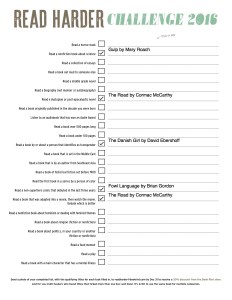
My plan is to double up on some of the tasks for the Read Harder Challenge this year, particularly because it’s my first year doing anything like this and I want to make sure I complete as many tasks as I can. Not to mention, the rules state you can do so…so there! For my second RHC book, I read The Road by Cormac McCarthy to complete both the dystopian/post-apocalyptic task and the task of reading a book and watching its movie adaptation. The Road has been on my TBR list for a while and I’m glad I finally got around to it.

I had read reviews of the book telling of its heartbreaking nature, and those folks weren’t lying. I had tears in my eyes a few times with both the book and the movie. McCarthy’s characters, a father and son duo, have only each other while navigating the world after an unknown disaster has destroyed nearly everything. They brave the elements together and face not only bitter cold and smog, but also the “bad guys” who have turned to cannibalism to survive. Even though the story can be dark and depressing, you can feel the love between the man and his boy. It’s hard not to imagine how you’d cope in the same situation with your own loved ones, questioning whether it’s better to continue surviving or succumb to death.

The movie, of the same title, was very true to the book. There was a bit of reordering, added flourishes, and deletions as Hollywood tends to do, but it really didn’t change the story. I only recognized one actor in the film, but the casting was great. I think the movie was more suspenseful (even though I already knew what was going to happen, since I watched it after reading the book). But I can honestly say that this was not a case of one medium being better than the other. I usually prefer one over the other, but I think that the book and movie were so similar and well-written this time that I can’t really choose one. I’d heard many people sing McCarthy’s praises and now I know why. He is a great writer, and I would definitely read more of his novels.

Other books I considered for the dystopian/post-apocalyptic task: Gold Fame Citrus by Claire Vaye Watkins, Thirst by Benjamin Warner

Other books I considered for the movie adaptation task: Wild by Cheryl Strayed, What’s Eating Gilbert Grape by Peter Hedges, Me Before You by JoJo Moyes, Girl on the Train by Paula Hawkins, Billy Lynn’s Long Halftime Walk by Ben Fountain, Fantastic Beasts and Where to Find Them by Newt Scamander (JK Rowling)

*You can find the editable form for the Read Harder Challenge (like the one I used above) at this link. I’ve also found good suggestions for each task on the Goodreads group for the challenge.